art is subjective but honestly? psych is truly the greatest show ever created and that’s barely a matter of opinion. even from the first episode, one of the greatest pilots of all time, which perfectly sets up the characters, their personalities, their relationships, all in a way that feels completely natural and realistic. and that realism continues throughout the show, because these characters act and interact like real, distinct people with consistent characterization and development!!!! literally the entire ensemble is perfectly cast, with brilliant acting. i can talk about the leads for years but, henry spencer!!! lassiter!!!! chief karen vick!!!!! shawn’s ambiguous bisexuality!!! the camerawork, especially in the first season! shawn and henry’s complex relationship was the OG lady bird…..shawn spencer would be a completely different character without james roday’s acting and line choices…..james roday and dule hill’s insane chemistry that is the BACKBONE of this show…..and the flashbacks where younger henry is just played by corbin bernsen in a wig? their MINDS!!!!
someone: so what do you think is the solution to homelessness?
me, socialist:
Let homeless people occupy peopleless homes, build houses for use rather than exchange, 3D print comfortable houses in a day, convert corporate skyscrapers into housing and commercial malls into publicly-accessible community centers with living commons and entertainment
When you say it to people and they break
“But the money? … we can’t just? But, Money? We can’t just… help… people? Can we? The Money. We can’t just help people? Like that? We can’t just? Money?”
There’s more to it than free real estate.
A massive portion of homeless people are mentally ill, and many of those illnesses aren’t being treated. Homeless people who have been on the streets and had their illnesses untreated for most of their lives aren’t going to adjust super well to suddenly having a place to live.
We need to build safety nets. We need social workers and mental health care professionals to help the homeless.
Every person deserves a roof and health care. Those two things need to go hand in hand.
The Housing First model of dealing with homelessness does exactly this. But actually when homeless people with mental illness or drug dependencies get into housing they start to do a lot better. Yes there are safety nets and things to work on after but it starts with housing. Homeless shelters right now aren’t doing enough because they either limit stays or make it so that drug addicts aren’t allowed to stay there at all. Obviously they’re still helping people but the Housing First model would actually help a lot more people long term and even be cheaper for the government in the long run. Unfortunately I don’t have sources but if someone can add them that’d be great.
I like the way you’ve phrased this question in a way that anticipates my response.
To start with, Shakespeare isn’t really tied to concepts that define Greek tragedy. He occasionally uses the unities (Comedy of Errors, The Tempest), but there’s no hard evidence to suggest that he read Aristotle’s Poetics (which had only been rediscovered in the west about 100 years before Shakespeare’s time and didn’t have the status it does now). And his knowledge of Greek devices is just as likely to have come from Plautus or Seneca, or any other Greek or Roman drama he would have read at school.
But even had he been aware of the concept of hamartia I do think that the idea of a tragic flaw is rather too simplistic to be applied to Shakespeare’s works. If the tragedy boils down to a particular characters’ one flaw or action then it reduces the complexity of the play and fails to take into account the complications involved in a character’s situation. It’s not even clear what the single flaw might be in many cases, as you point out by providing two (of many) potential flaws for Lear. So for instance, if Lear’s flaw is ‘pride’ or ‘poor judgement’, that suggests that if he had accepted Cordelia’s expression of love at the beginning the tragedy might have been avoided. But the question is whether evasion is the correct answer. Such an approach doesn’t take into account that there is some pride involved in Cordelia’s refusal to give her father what she wants, it also doesn’t deal with the fact that there are tensions waiting to erupt in Lear’s court. To say that pride or poverty of judgement is a flaw also sweeps aside the serious questions the play raises about why Lear might have become such a flawed individual. It’s certainly not as simple as saying that that’s the way Lear is. As a king, he hasn’t had to exercise much character judgement, because people obeyed him. As Lear says later in his madness, ‘they told me I was everything’ (4.6.104); if Lear is proud, then it’s because he lives in a society that has encouraged pride, that has made him think that he is everything. Lear’s poor judgement or pride highlights a much bigger problem of the corrupting influence of power and inequality.
For Hamlet, too, it’s not clear what decision could have been made that would have prevented the tragedy. I get frustrated by those who blame indecisiveness because most people believe that murder is unacceptable, and yet they blame Hamlet for not committing murder quickly enough, especially when he’s not even sure whether he ought to trust the ghost. It’s utterly bizarre. It might be that his not killing the king causes more deaths, but that’s consequentialist and utilitarian in a way that Hamlet could hardly have predicted. The tragedy isn’t about how many people die, but why they die. Again, Hamlet’s discomfort and indecisiveness raise questions about the injustice of his situation, the fact that he’s been placed between two mutually exclusive injunctions: to honourably revenge his father, and, as a Christian, to not kill. It also exposes something important about the sort of society that makes it necessary to kill one’s kin, whether that’s Hamlet or Claudius. Without power and hierarchy, there would be no need for murder or revenge (think Macbeth). The problem is much larger than Hamlet’s own choices. The more pressing issue is not whether he should have made a decision sooner, but the condition under which he is forced to make such choices. How can anyone be blamed for not being able to act decisively when there’s no correct answer?
Othello might seem more straightforward. Undoubtedly if Othello weren’t jealous, then the tragedy wouldn’t have occurred. But then again, What are the conditions of his jealousy? Othello is subject to a sense of inadequacy that comes from being a minority citizen and an army man rather than a courtier: ‘Haply for I am black / And have not those soft parts of conversation / That chamberers have…’ (3.3.267-69). This feeling of self-doubt is one of the things Iago exploits to encourage Othello’s jealousy, and it’s not entirely Othello’s own fault that he is this way when it has to do with social prejudices and the way he’s treated. The play shows the toxicity of such discrimination and the effect it can have on an individual, even one of such noble stature as Othello. Likewise with the concept of jealousy itself: Othello might be driven to jealousy, but the tragedy couldn’t have occurred without the internalised misogyny that makes a person believe that murder is a just punishment for adultery. Without a social framework which encourages jealousy, Othello could hardly have been affected. It might seem far-fetched to suggest that an early modern writer like Shakespeare is positing the possibility of a world where there is no jealousy, but he does make Emilia imagine a society in which adultery is justifiable, and even one where women aren’t solely blamed: ‘I do think it is their husbands’ faults / If wives do fall’ (4.3.85-86). So once again, while it doesn’t excuse Othello’s responsibility entirely, a character’s flaw is only part of a greater current of forces beyond an individual’s control.
These are extremely short analyses for something I could go on about for much longer (and for pretty much every play), but essentially, I think Shakespeare’s tragedies reveal something more fundamental than individual responsibility: it points out the systemic problems that cause flaws and circumstances to begin with.
Love this!!! Especially the bit about Hamlet.
THANK YOU for saying the Hamlet thing!!!
I really like this analysis! It feels fitting for Coriolanus too, since a lot of people say his fatal flaw was his pride or temper – but at the same time it was him sparing Rome and listening to his family that gave Aufidius the excuse to kill him. If him swallowing his rpide and anger is what gave him a chance to be assassinated, is it really his fatal flaw at all?
Coriolanus was also shaped by his upbringing and culture – he’s very much his mother’s son. Not to mention the tribunes also had a part to play in his exile.
I’m reminded of that line from 3.2, spoken by Volumnia: Do as thou list. Thy valiantness was mine; thou suck’st it from me, But owe thy pride thyself.
His actions are his, and things might have worked out better if he kept his mouth shut, but (as OP had mentioned) his circumstances are also important to take into consideration.
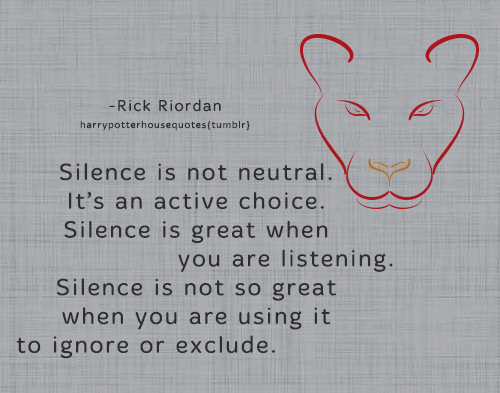
GRYFFINDOR: “Silence is not neutral. It’s an active choice. Silence is great when you are listening. Silence is not so great when you are using it to ignore or exclude.” –Rick Riordan
I know some of you joke about making Victor Hugo roll in his grave, but there are small cracks on his tomb in the Pantheon, and I’m telling you: he’s trying to get out
this is the single scariest post in this goddamn website









 I'd Much Rather Have a Dragon