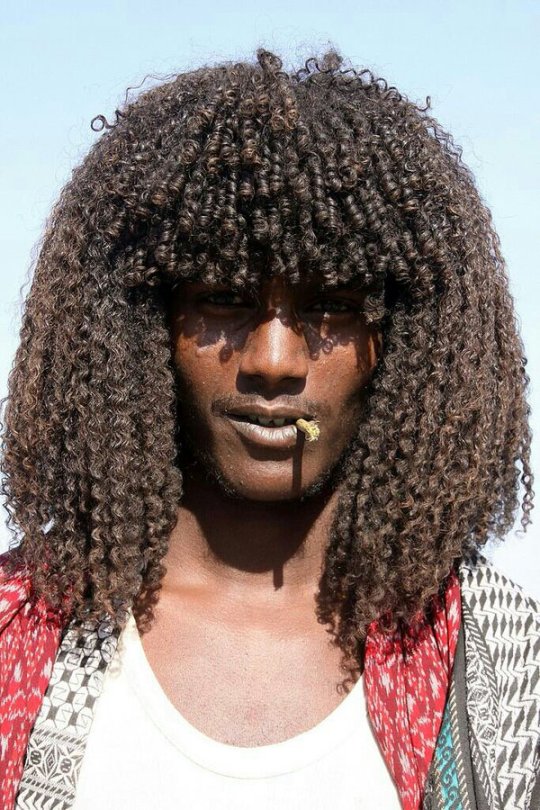
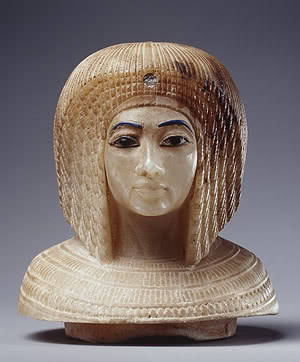
do you want to know something?? I always wondered what the hell kind of hairstyle the Ancient Egyptians were trying to portray with depictions like these
and this
until I did my hair this morning and
oh
welp
you can take the noses off our statues but until you find a way to take Egypt out of Africa we’re still going to find ourselves
I’m reblogging this post without all the salty, racist commentary because I’m sick of looking at it. please spread this around again in its pure form for posterity.
What’s funny is that white people thought they were hats/crowns 😂
And here’s some pictures of the Afar people, who still live on the horn of Africa today.
Cool, huh?
Beautiful
People thought it was Hats and Crowns? How could they not see hair?
The same reason archaeologists, upon finding a woman’s skeleton in the grave of a famous Roman gladiator, immediately wondered where the gladiator’s skeleton was: Old Straight White Man™ brand denial.
Same way they denied the Really Gay Egyptian Tomb, too. It’s kind of a Thing.
This post is amazing, I’m so glad it exists. I have learned.
There is so much greatness in this post and all white people care about is defending why they thought the depictions are hats. White people??? Why are you like this???
I’m salty as fuck that we were taught they were crowns at SCHOOL. For Christ sake.
Their hair is laid to rest. How do I get on this wave?????
I’m really afraid how woke my kids are gonna be in school.
This is why Eurocentrism is bad for archaeology, and we really need race and gender theory. We can only learn about the past if we’re able to ask the right kinds of questions.
what is with this odd movement of african americans who want to
appropriate egyptian culture and history, pretend they were the real
egyptians, not the brown people who live there today, and then say its
white peoples fault africans werent credited with egyptian civilization.
its disgusting and racist
I’m white, so I can’t speak on the subject with any great authority, but you are talking about a group of people who by and large had their own history, culture, and self-determination violently ripped away from them and erased for many generations. White colonizing governments do historically have a record of erasing non-white history for their own gain, so it should be no surprise if the people they have colonized or forcibly migrated are ill-informed about their own history, or are skeptical of the history that was taught to them.
Does it really seem so strange and wrong to you that African Americans would feel a desire to re-connect with their African heritage, or that they might be attracted to the idea of connection with a powerful and highly advanced African civilization, especially when they see faces like theirs reflected in some of its artwork? That’s not appropriation, and there is nothing disgusting or racist about it. It’s a perfectly understandable human longing.
Geographically speaking, Egypt exists at a crossroads of continents. There is a long and well-documented history of trade routes (both along the Nile Valley and the Mediterranean coast), waves of population movement, and invasion. During the 25th Dynasty, Egypt was part of the Kushite Empire, ruled by Nubians; an ethnic group indigenous to what is now southern Egypt/northern Sudan, who were black in the modern, racial sense of the word. The population of Egypt is not now, nor has it been since ancient times, made up of a single uniform ethnicity.
Black people desiring or claiming a connection with Ancient Egyptian history and heritage, regardless of whether such a connection exists, genetically speaking, for individuals on a case by case basis, does not harm anyone. Hostile and ignorant attitudes like yours do.
Egyptians are not Nubians. Nubians lived south to Egypt and due to their connections they liked and adopted the nubian hair style, which is this, but they didn’t have african hair like them, so they resolved to wigs. That’s all.
Some things I think it’s worth bearing in mind when we talk about this:
Sweeping generalizations about the ethnic makeup of the population of Ancient Egypt aren’t useful, constructive, or accurate.
This civilization existed over a period of millennia, at a geographical crossroads, and included different areas and different population groups at different times.
In the ancient world, borders were not starkly drawn, heavily policed, rarely-altered lines. Regional distinctions were defined by shared cultural identity, but also by the sphere of influence and power exerted by the ruling individual or government.
There has always been genetic mixing between neighboring populations, especially populations known to have had friendly trade relations.
Race, as we think about it today, is a modern construct. Prior to a few hundred years ago, identity was primarily based on where someone lived, what language they spoke, and what religion they practiced, rather than the color of their skin. “Egyptian” was not an ethnicity, but a cultural identity.
Making generalizations about the demographics of Ancient Egypt based on the ruling class (i.e., most well-preserved mummies and statues) makes about as much sense as making generalizations about the English peasantry using Henry VIII as your primary example, or making generalizations about the population of America based only on portraits of U.S. presidents.
tl;dr People who say “some Ancient Egyptians were black Africans” and people who say “most Ancient Egyptians were not black Africans” are both correct. People who say “all Ancient Egyptians were black Africans” or “no Ancient Egyptians were black Africans” are both wrong.




 I'd Much Rather Have a Dragon